
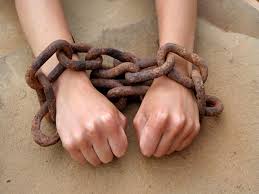
 There are an estimated 30 Million slaves throughout the world. But we, in Britain, cannot point the finger. We must ask why we tolerate 10,000 or more slaves in the United Kingdom today. We need a stronger law which will rank human trafficking alongside kidnapping and murder. We also need more vigilance on the part of the police, officials, social workers and the public as a whole to spot the signs of workers in conditions with restricted liberty.
Category: Poverty
Rescued from slavery on rose farm
 Imagine fields of roses and a farm dedicated to the supply of these beautiful flowers to wealthy people in Bangalore, India. Roses represent romance and beauty.
But there is a darker side to this idyllic picture. The farm relied on 4 young boys, held as slaves to supply the labour. Two brothers had been trapped there for 5 years. One boy was just 9 years old.
They had been working on the farm to pay back a loan their parents had taken from the owner. But it was obvious that the loan would never be repaid and the children were effectively slaves. Continue reading “Rescued from slavery on rose farm”
Jesus: Giving to the needy
 We cannot read the words of Jesus without seeing the importance he gives to giving to the poor or to those in need. It is God’s nature to give to all men unconditionally. So, we are encouraged to be givers to those in need. We are not to parade our giving but to give in secret. The true value of our gift is not measured in pounds or dollars but according to what the gift cost us. But if we give joyfully and unreservedly then we cannot help benefitting ourselves by giving. It is a win-win situation!
Continue reading “Jesus: Giving to the needy”
Destroying Childhood?
 In the United Kingdom there is a lot of fuss being made about the new school curriculum. Apparently, 198 academics have signed a letter which says that the new curriculum “abolishes childhood”. Now, I do not have qualifications to judge the curriculum educationally. But really, “abolishing childhood” or “destroying childhood”?
Let me take you to the real world.
- A little girl of 7 in Mumbai, India is forced into child prostitution. That is destroying childhood.
- A small boy in Asia is made to work long hours in a brick factory. That is destroying childhood.
Christians, non-violence and the Middle East – some random thoughts
This is a great a article so I thought you might like to read it. From my blogging friend unkleE.
Why do I care?
 It is normal for me to care for my extended family and for people in my social group. But why do I care about people I have never met?
- Why do I care about a bonded labourer, treated as a slave in India?
- Why do I care about a child in Africa, denied an education because his parents cannot afford to send him to school?
- Why do I care about a young woman in Thailand, forced into prostitution by ruthless traffickers in human misery?
- Why do I care about a single mother in England, working on a minimum wage, facing the humiliation of visiting a food bank to feed her children?
Share your bread with the hungry

Those who know me, and my background with charities, will know that I am orientated towards people giving money and using that money to meet needs. But this article is about sharing, and sharing is different from just giving money. Sharing is not necessarily better than giving money, but the emotional impact is greater. Sharing food is more personal than money and connects people together in an act of love.
Food Poverty in Britain
 If you had asked me 20 years ago to write about food poverty in Britain, I would have laughed and said, “No! Food poverty only exists in Africa or India.” But now, there is so much poverty in Britain, the USA and other ‘rich’ countries.
This poverty is real. I am not talking about starvation, but about malnutrition which reduces the physical and mental potential of a child. Our politicians seem to be content with creating an underclass, earning low wages to maximise the profits of big companies.
And yet, for the economy of the UK to grow, it is in the interests of the commercial sector that everybody has enough money for their needs, and money to spend. We seem to be heading relentlessly back to the 18th and 19th Century, when the gap between rich and poor was even greater than now.
Continue reading “Food Poverty in Britain”
 Compassion and Justice