What can be done about the broken justice systems around the world, particularly those in developing countries? We need first to understand the history of those countries.
When I was a child, I was fascinated by maps. I had a world map in which vast areas were coloured in Red, which I was proudly told by my parents was the British Empire. An empire where ‘the sun never set’ and I felt special and privileged to belong to the ‘best country on earth’! In fact, most of the world, two hundred years ago, was controlled be european nations: Great Britain, France, Spain, Portugal, Russia and even Belgium. Colonies spread though the South and Central America, most of Africa and great swathes of Asia. It was the colonial era. Continue reading “Broken justice systems: the legacy of Colonies”
My dream is to see a world in which extreme poverty is eliminated. But there is a largely hidden problem which frustrates attempts to deal with economic poverty. A recent study pointed out that the number one problem that poor people face in developing countries is not starvation or disease but a fear of violence. Violence keeps people poor and prevents them bettering themselves and their families.
Imagine …
Imagine living in a community where you are totally outside of the rule of law. Where the police force and courts only look after the well-off and the educated. Where law enforcement is under-funded and cannot cope with the multitude of crimes committed against the poor and the vulnerable. Where the police force and courts are corrupt and accept bribes from the guilty.
Well here I am in Los Angeles for the Justice Conference. In looking through my notes I found this – which I wrote 10 years ago. My dream has widened a little but in reading what I had written a thrill overcame me because I am still dreaming!
“I dream of a day when all the people of the earth will have a chance to flourish. When all, regardless
As we look at our own country, and around the world, we see that bribery and corruption causes untold misery in the lives of ordinary people, the poor and the powerless. Do we stop giving because in some cases “aid” is diverted to Swiss bank accounts? What can we do to help stamp out this evil, which causes so much hardship, and paralyses a country’s development?
Bribery corrupts the giver of the bribe, the receiver of the bribe and the culture which allows it. But before we “cast the first stone”, we need to be sure that our own government, our international businesses and our international charities are faultless, in not only refusing to offer bribes, but in not accepting anything except transparent accountability. Read on to explore this further.
I will be 70 years old later on this year. I have always had a sense of purpose in my life though it took me some time to realise what it was. At the age of 45, I left the computer industry to set up a charity. I have now passed control of the work to young people who are doing an excellent job. But what does the future hold for me?
Putting it simply, I still want to change the world. In this article I aim to discuss the question of whether we can, or should, change things, and how can we go about it!
Grabbing land from the powerless has been going on for centuries. In the past it was done by conquest. The Romans stole the best land in conquered countries and enslaved the local people to work on their farms. Settlers stole land from the native Americans in America and Aborigines in Australia. European colonialists stole land from the indigenous population in Africa and elsewhere to set up their plantations. But land grabbing is still going on around the world today. This article exposes some examples and calls for justice.
Bonded labour is the most common method of enslaving people around the world. A person becomes a bonded labourer when their labour is demanded to repay a loan. The person is then trapped into working for very little or no pay, often for seven days a week. Interest makes it impossible to pay the loan off and often debts are passed on to next generation.
They are forced to work to repay debts their employer says they owe, and they are not allowed to work for anyone else. Various forms of force are used to make sure they stay. In many cases they are kept under surveillance, sometimes under lock and key. Poverty and the threats of violence force many bonded labourers to stay with their masters, since they would not otherwise be able to eat or have a place to sleep.
Today the International Labour Organisation estimates a minimum 11.7 million people are in forced labour in the Asia-Pacific region, the majority of these are in debt bondage.
Bonded labour has existed for hundreds of years. It was used to trap labourers into working on plantations in Africa and the Caribbean – after the abolition of the Transatlantic Slave Trade.
In South Asia it is rooted in the caste system and predominately affects Dalits (the lowest caste called Untouchables) and still flourishes in agriculture, brick kilns, mills and factories. In the Punjab region of India hundreds of thousands of men, women and children are forced to work as bonded labourers in quarries and brick kilns where they receive little or no pay in return for a loan typically used for survival.
 What can be done about the broken justice systems around the world, particularly those in developing countries? We need first to understand the history of those countries.
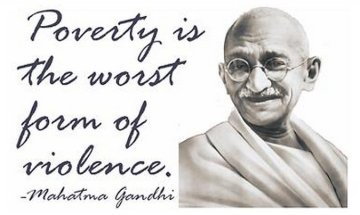 My dream is to see a world in which extreme poverty is eliminated. But there is a largely hidden problem which frustrates attempts to deal with economic poverty. A recent study pointed out that the number one problem that poor people face in developing countries is not starvation or disease but a fear of violence. Violence keeps people poor and prevents them bettering themselves and their families.
 As we look at our own country, and around the world, we see that bribery and corruption causes untold misery in the lives of ordinary people, the poor and the powerless. Do we stop giving because in some cases “aid” is diverted to Swiss bank accounts? What can we do to help stamp out this evil, which causes so much hardship, and paralyses a country’s development?
 I will be 70 years old later on this year. I have always had a sense of purpose in my life though it took me some time to realise what it was. At the age of 45, I left the computer industry to set up a charity. I have now passed control of the work to young people who are doing an excellent job. But what does the future hold for me?
 Grabbing land from the powerless has been going on for centuries. In the past it was done by conquest. The Romans stole the best land in conquered countries and enslaved the local people to work on their farms. Settlers stole land from the native Americans in America and Aborigines in Australia. European colonialists stole land from the indigenous population in Africa and elsewhere to set up their plantations. But land grabbing is still going on around the world today. This article exposes some examples and calls for justice.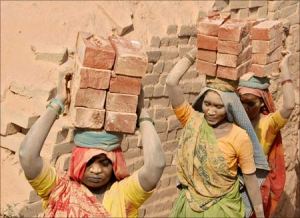
 Compassion and Justice