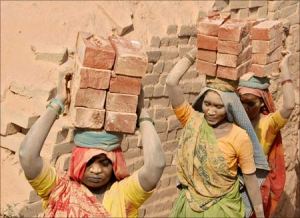
Bonded labour is the most common method of enslaving people around the world. A person becomes a bonded labourer when their labour is demanded to repay a loan. The person is then trapped into working for very little or no pay, often for seven days a week. Interest makes it impossible to pay the loan off and often debts are passed on to next generation.
They are forced to work to repay debts their employer says they owe, and they are not allowed to work for anyone else. Various forms of force are used to make sure they stay. In many cases they are kept under surveillance, sometimes under lock and key. Poverty and the threats of violence force many bonded labourers to stay with their masters, since they would not otherwise be able to eat or have a place to sleep.
Today the International Labour Organisation estimates a minimum 11.7 million people are in forced labour in the Asia-Pacific region, the majority of these are in debt bondage.
Bonded labour has existed for hundreds of years. It was used to trap labourers into working on plantations in Africa and the Caribbean – after the abolition of the Transatlantic Slave Trade.
In South Asia it is rooted in the caste system and predominately affects Dalits (the lowest caste called Untouchables) and still flourishes in agriculture, brick kilns, mills and factories. In the Punjab region of India hundreds of thousands of men, women and children are forced to work as bonded labourers in quarries and brick kilns where they receive little or no pay in return for a loan typically used for survival.
 There can be no doubt that God loves justice. In the Bible justice is often linked with righteousness (right living) and mercy. I am not talking here about justice in the context of judgement of wrong-doers. I am talking about Justice in the way we treat our fellow-men who may be poor, disadvantaged or weak.
 As we look at the world around us, we see so much suffering, and so much injustice. There are a number of ways we can react to this suffering. We can get involved in a charity which seeks to address the problem. Alternatively we may choose to join an action group which seeks to resolve the problem directly through campaigning for justice. Which is the best way? Sometimes we hear someone say that we need to get to the root the problem not just apply sticking plasters. Someone else will say that this is all very well, but until the problem is eliminated, we must meet the needs through compassion and love. I the rest of this blog I will say that we need both approaches.
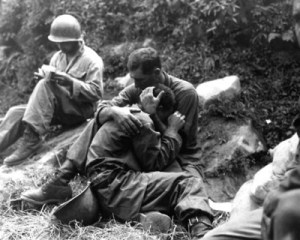 We are approaching the 100th anniversary of the outbreak of World War 1 – a terrible and unnecessary conflict involving 30 different countries. It was a war dreamt up by the elite in Britain, Germany, France, Russia and other countries, but a war fought between ordinary people who died in their millions. We must remember those who died, but with a deep shame. We dare not ‘celebrate’ the war or glorify or glamourise it in any way.
 Jesus certainly knew how to be controversial. He taught that love knows no bounds. We are not only to love God, our creator, but to love our neighbours as ourselves. But it doesn’t stop there. We are even to love our enemies, people who treat us badly and certainly do not love us. This is probably one of the hardest things to do and challenges us all.
 There is neither Jew nor Greek,
 Compassion and Justice