 It is so easy to pop into a supermarket and buy a packet of prawns, eat a pre-cooked seafood pie, or enjoy a pawn cocktail at a favourite restaurant. Have we ever stopped to wonder, how once a luxury item, is now common-place? Have we ever wondered why the price is so low?
The hard facts are that there can be abuse of workers, injustice and slavery at every stage in the process: from the women and children who catch the baby prawns (fry), the prawn farmers, the depots, the packers, and transport to your supermarket. The cheapest prawns come from Thailand, Bangladesh and other Asian countries. This is no accident, as wages are least in these countries, and exploitation and slavery is rampant, though largely hidden.
The details that follow are horrific but do not underestimate the consumer power.
Continue reading “Seafood Slavery”
 I have been writing about some of the injustices I see in the world and aim to campaign to reduce it’s impact. Part of the answer is to have stronger laws and stronger law enforcement to eliminate them. Another part of the answer is to make people aware so that injustice becomes unacceptable. But what is the root cause of injustice? There is no avoiding the fact that we are dealing with human nature at the deepest level.
 There are 27 Million slaves throughout the world. But before we, in Britain, point the finger we must ask why we tolerate 10,000 or more slaves in the United Kingdom today. We need stronger laws to rank human trafficking alongside kidnapping and murder. We also need more vigilance on the part of the police, officials, social workers and the public as a whole to spot the signs of workers in conditions of restricted liberty.
 If I told you that I have 34 slaves working for me, you would be rightly shocked. “What a hypocrite”, you might well say, “Fancy writing all those blogs about justice and compassion and yet using slave labour to support his life-style!”.
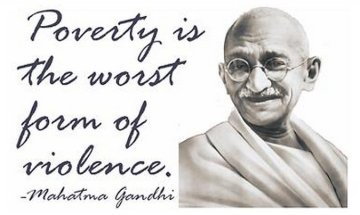 My dream is to see a world in which extreme poverty is eliminated. But there is a largely hidden problem which frustrates attempts to deal with economic poverty. A recent study pointed out that the number one problem that poor people face in developing countries is not starvation or disease but a fear of violence. Violence keeps people poor and prevents them bettering themselves and their families.
 There is neither Jew nor Greek,
 Compassion and Justice