“LOVE WITHOUT JUSTICE IS SENTIMENTALITY
JUSTICE WITHOUT LOVE IS LEGALISM.”
God’s love in Action…
For many years the strap line for Kingscare (the former name of Karuna Action) was, “God’s love in action”. Love is voluntary, and is an excellent motive for giving.
We need to be sure that our love is not condescending.
It needs to be more than just sympathy.
It must not be out of a sense of superiority.
We can stand alongside the needy in the world, and stand up for them. That is where justice comes in.
Christine and I have recently joined a local choir and have been preparing hard for a Christmas concert. The choir is a secular choir but many of the pieces we sing are ‘Christian’ in nature. One such song starts as follows:
Homeless woman in Toronto. (Photo credit: Wikipedia)
How do we please God? Do we please God by religious observances or is God more interested in how we treat our fellow human beings? This is not a rhetorical question. God loves each man, woman and child on the earth – and he wants us to do the same.
The Bible makes it very plain that unless our actions match up to our words, we can deny ourselves, beat ourselves, and starve ourselves to no avail. The way we treat our neighbours, our communities and people throughout the world is vitally important. Unless we stand up for justice, treat our workers correctly and feed the hungry we cannot hope to please my creator, God. Unless we show compassion to, and love those around us, who we can see, we cannot claim to love God. Continue reading “God’s chosen fast”
We may say that we love God, but is it just words? Love involves action, so how do we actively express our love for Him? How can we be sure that our love for God is not just a religious or emotional feeling?
Jesus told a story in which he clearly shows us that our love for our fellow-man is received by Him as love for Himself. How amazing is that? As we show compassion towards those in need, we can be really loving God.
There is a warning too. Indifference to the needs of the poor, or sick, or homeless is indifference towards God. We cannot say that we love God, and at the same time, be indifferent to the needs we see around us. Continue reading “The least of these”
War, disease, famine, debt, unsafe water and many other things contribute to poverty in the world, But are these the root causes of poverty? We need to drill a bit deeper, and as we do, we come face to face with human nature and attitudes. In this article I argue that things like greed, fear, power and prejudice are the real root causes of a state of affairs where a quarter of the world lives in absolute poverty and many more live without the “necessities” that we take for granted.
Take war and conflict for instance. There is no doubt that violence between nations, or communities within a nation, causes vast poverty among the civilian population. But wars are caused by fear of other cultures or by the seeking of power or economic benefit over enemies. Civil wars or violence between governments and “terrorists” or “freedom fighters” have their source in fear, prejudice or injustice.
It is not very popular to talk about fear and greed. But their opposites, compassion and unselfishness, would transform society and eliminate poverty. The Bible declares that God loves justice and cares for the poor, and he urges us to be motivated by compassion and justice. As Christians we often pray, “Your kingdom come, your will be done on earth as it is in heaven”. As we seek God’s help in changing our own attitudes, we can affect the whole world and see an increase of the rule of God in our world.
Greed
Greed [1] is an ugly word and yet it is encouraged by some economists as the basis of a free market, or capitalism. It is wanting more than our fair share of the worlds resources. Wealth is often accumulated purely for its own sake, or as a measure of a persons status or worth. I long for a world where a person will be valued by the wealth they give away rather than accumulate.
There is enough food produced in the world to give everyone 3000 calories per day. Yet obesity is common while so many suffer from the damaging effects of under-nourishment.
Greed as a root cause of poverty causes unequal distribution of resources, unfair trade, conflict and unethical debt.
Fear
This can be fear of people we see as different to ourselves. It can be fear of other cultures, nationality, tribal group, social status or caste, language or religion. Fear can produce war, conflict or violence. Fear may stop us being generous to other people if we are afraid that giving may have a detrimental effect on our lifestyle.
Corruption
The perception of Corruption throughout the word
Corruption [2]is caused by greed, or a love of Power. When corruption is endemic in society its effect on poverty in that society cannot be over-estimated. At a national level it is a positive disincentive to international aid as so often the “aid” ends up in a leader’s Swiss bank account. Ask the average man or woman in one of the aid-donor countries about international aid and he is likely to mention corruption.
People in a position of power over others may seek a bribe. They may be politicians, custom officials, police or lawyers, corporate buyers, or gang members seeking “protection money” from local businesses. The giving and offering of bribes corrupts us all and has a damaging effect on the most vulnerable members of society, the poor.
Indifference
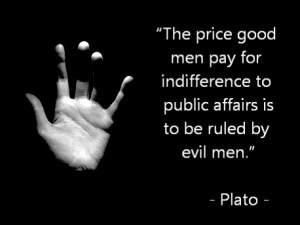
“All that is required for evil to prevail is for good men to do nothing.”
(Generally attributed to Edmund Burke)
We do not have to be greedy, fearful or dishonest to have a detrimental effect on others. Indifference to the need of others is a major cause of poverty and enables it to persist. What is the opposite? Love, compassion and generosity is the antidote.
Indifference is not just found in developed nations. Comparatively rich people, living in developing countries, are so often indifferent to the needs of their fellow countrymen.
Each one of us, as well as being generous ourselves, can have a positive influence on our communities, by our example, and by the way we seek to make others aware of needs.
Power
Money is not the only thing which people desire to the detriment of others. The pursuit of power, often for its own sake, can be used to oppress other people, creating or re-enforcing poverty.
Prejudice
This can take the form of racism, or social status snobbery. People of other ethnic groups, language, religion or social class (or caste) are thought of as inferior. Extremes can be regarding others as sub-human or simply that somehow people living “over there” do not share the same thoughts, values or aspirations as ourselves.
Prejudice causes poverty because we may not value others as we value ourselves and therefore they are not worthy of help, or fairness in our dealings with them.
Conclusion
The root causes of poverty are found within human nature. They affect us all, regardless of whether we are Christian, Moslem, Hindu or of no faith at all. As human beings we have been made in the image of God and have an amazing capacity for compassion and selflessness as well as the potential for awful cruelty and indifference. But it is my firm belief that we can change our own attitudes and actions, but we need the help of God.
Greed (Latin, avaritia), also known as avarice, cupidity, or covetousness, is the inordinate desire to possess wealth, goods, or objects of abstract value with the intention to keep it for one’s self, far beyond the dictates of basic survival and comfort. It is applied to a markedly high desire for and pursuit of wealth, status, and power
The word corrupt when used as an adjective literally means “utterly broken”.
The word was first used by Aristotle and later by Cicero who added the terms bribe and abandonment of good habits.
Morris, a professor of politics, corruption is the illegitimate use of public power to benefit a private interest.
Economist I. Senior defines corruption as an action to secretly provide a good or a service to a third-party so that he or she can influence certain actions which benefit the corrupt, a third-party, or both in which the corrupt agent has authority.
Kauffman, from the World Bank extends the concept to include ‘legal corruption’ in which power is abused within the confines of the law – as those with power often have the ability to shape the law for their protection.
I would really welcome any comments on this post. What do you think are the root causes of poverty? Whether you can add to my list, disagree with me or agree with me, your comments will be visible to all. You will need to give your email address, but you can be anonymous. I promise to delete only abusive comments!
If we were to ask the average man or woman in the street what he thinks of people who call themselves Christians, one of the things they might say is, “They’re always judging us”. As followers of Jesus Christ we may wish to be thought of as good living, upright people but the fact is that we so often put people off Jesus by being judgmental.
I have quite a large range of “friends” on Facebook. Hardly a day goes by without seeing some criticism or judgement upon fellow human beings, society or countries. Sometimes we are requested to “like” some outrageous statement about some more marginalised sections of the population – excluding them still further. Continue reading “Do not judge, or you too will be judged”
To someone who does not believe in God, or to someone who is undecided, it would seem that believing in God is like taking a leap into the unknown – “the blind leap of faith“. People require proof. Without proof it may seem foolish to stake all on something without evidence. But is that really true that faith is a blind leap?
Some Questions
Can we, who have put our trust in God, prove to others that we are right?
Can we prove to ourselves that what we believe is true?
Does an atheist need faith to stake all on his belief that there is no God?
Is there more to human existence than what we can experience through our 5 senses?
I am very aware that we live in a world full of suffering, hardship and poverty. Yet there is hope, there is room for optimism. We live in a truly wonderful world. I have a passion to eliminate poverty and so there is a tendency to be pessimistic about a world with almost insurmountable problems. And yet when I look at God’s creation and understand that He has a plan for this world, hope and optimism bubble up. I declare myself an optimist with dreams of a better future, but with my feet realistically standing in the present. Continue reading “What a Wonderful World”
“LOVE WITHOUT JUSTICE IS SENTIMENTALITY


 Greed
Greed 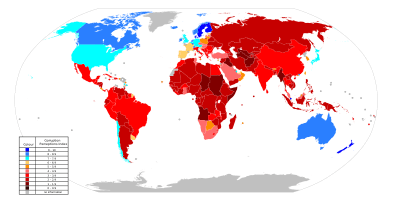
 We do not have to be greedy, fearful or dishonest to have a detrimental effect on others. Indifference to the need of others is a major cause of poverty and enables it to persist. What is the opposite? Love, compassion and generosity is the antidote.
 If we were to ask the average man or woman in the street what he thinks of people who call themselves Christians, one of the things they might say is, “They’re always judging us”. As followers of Jesus Christ we may wish to be thought of as good living, upright people but the fact is that we so often put people off Jesus by being judgmental.
 To someone who does not believe in God, or to someone who is undecided, it would seem that believing in God is like taking a leap into the unknown – “the blind leap of faith“. People require proof. Without proof it may seem foolish to stake all on something without evidence. But is that really true that faith is a blind leap?
 Compassion and Justice